
Protecting Vulnerable Voters
Federal CMS Guidance & Implementation Resources
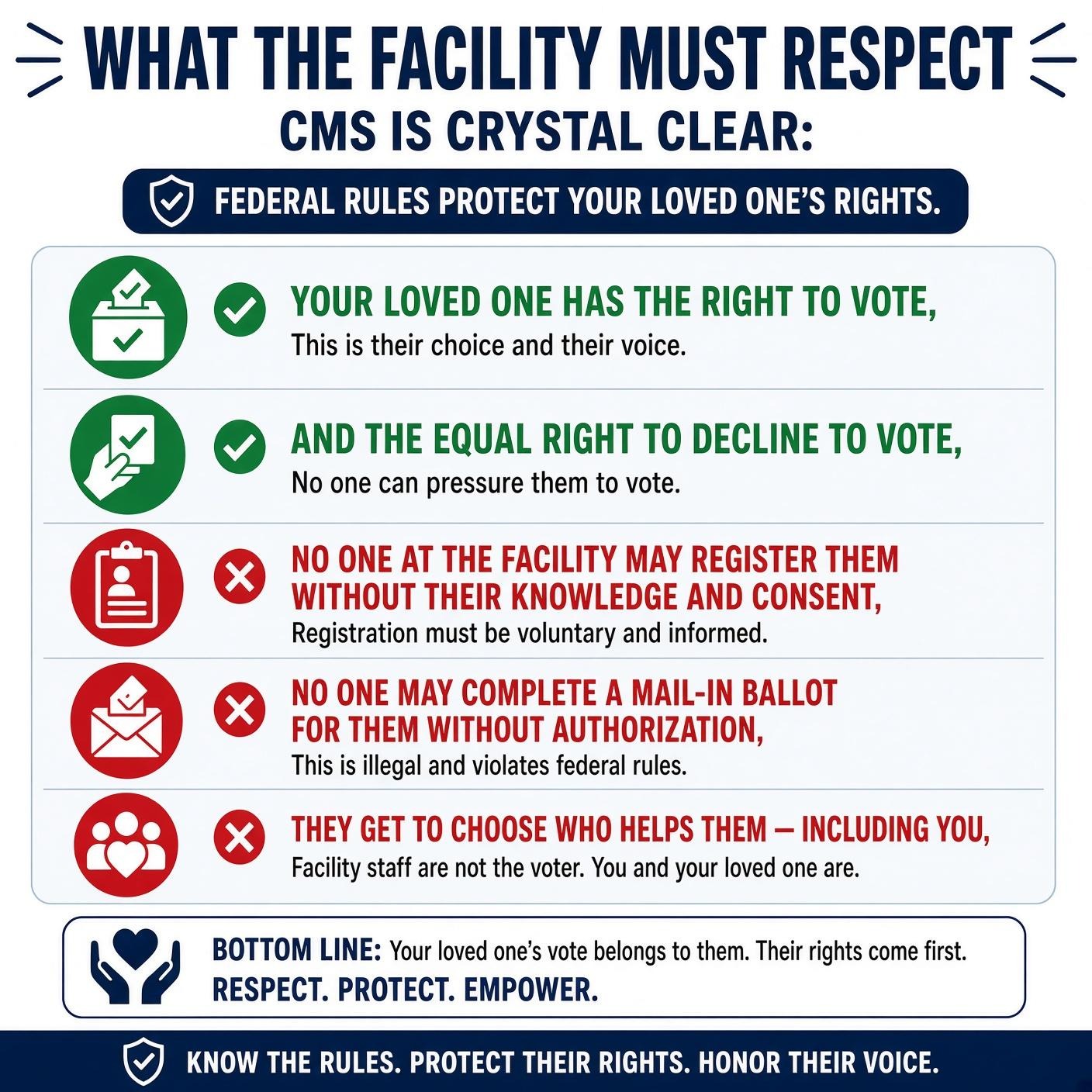
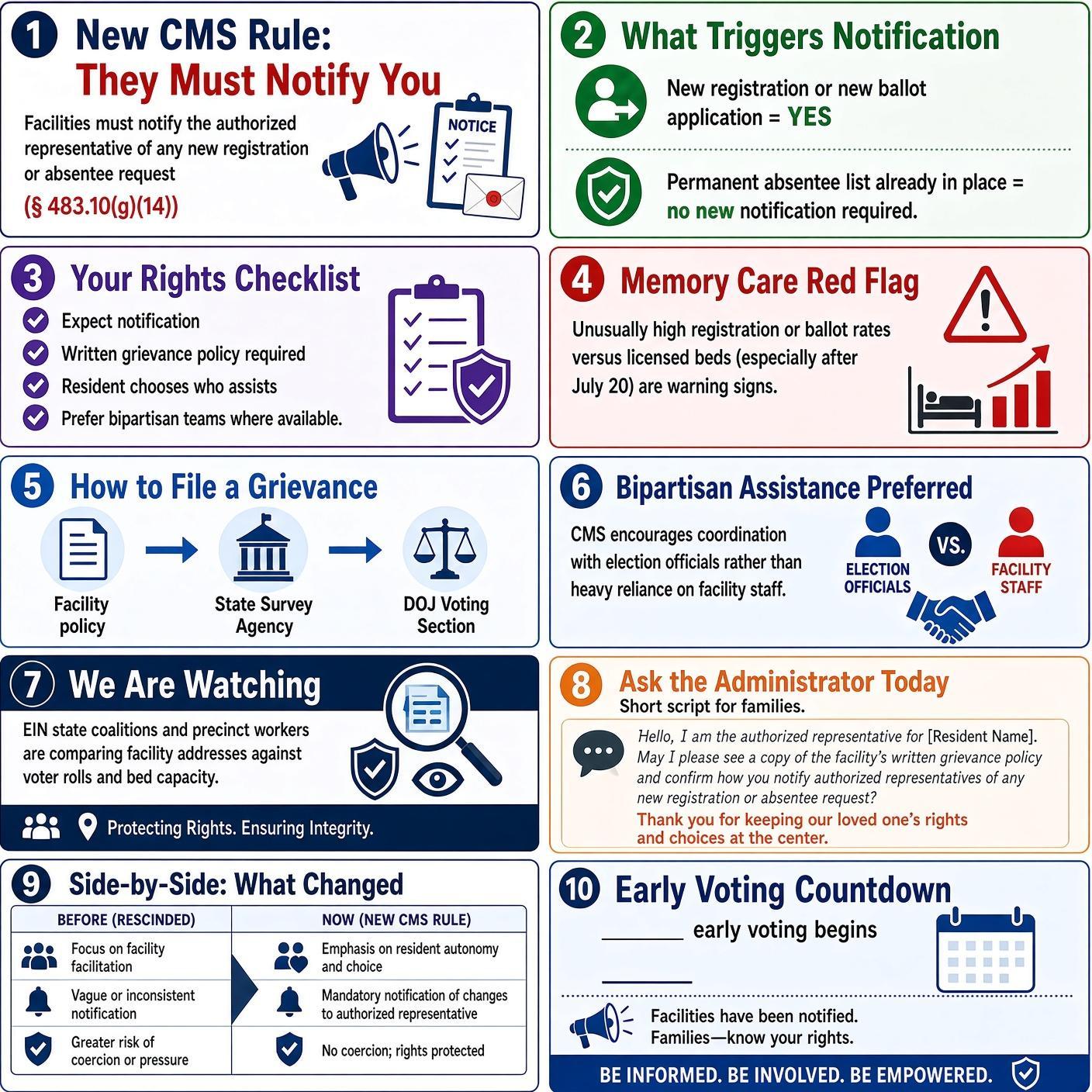
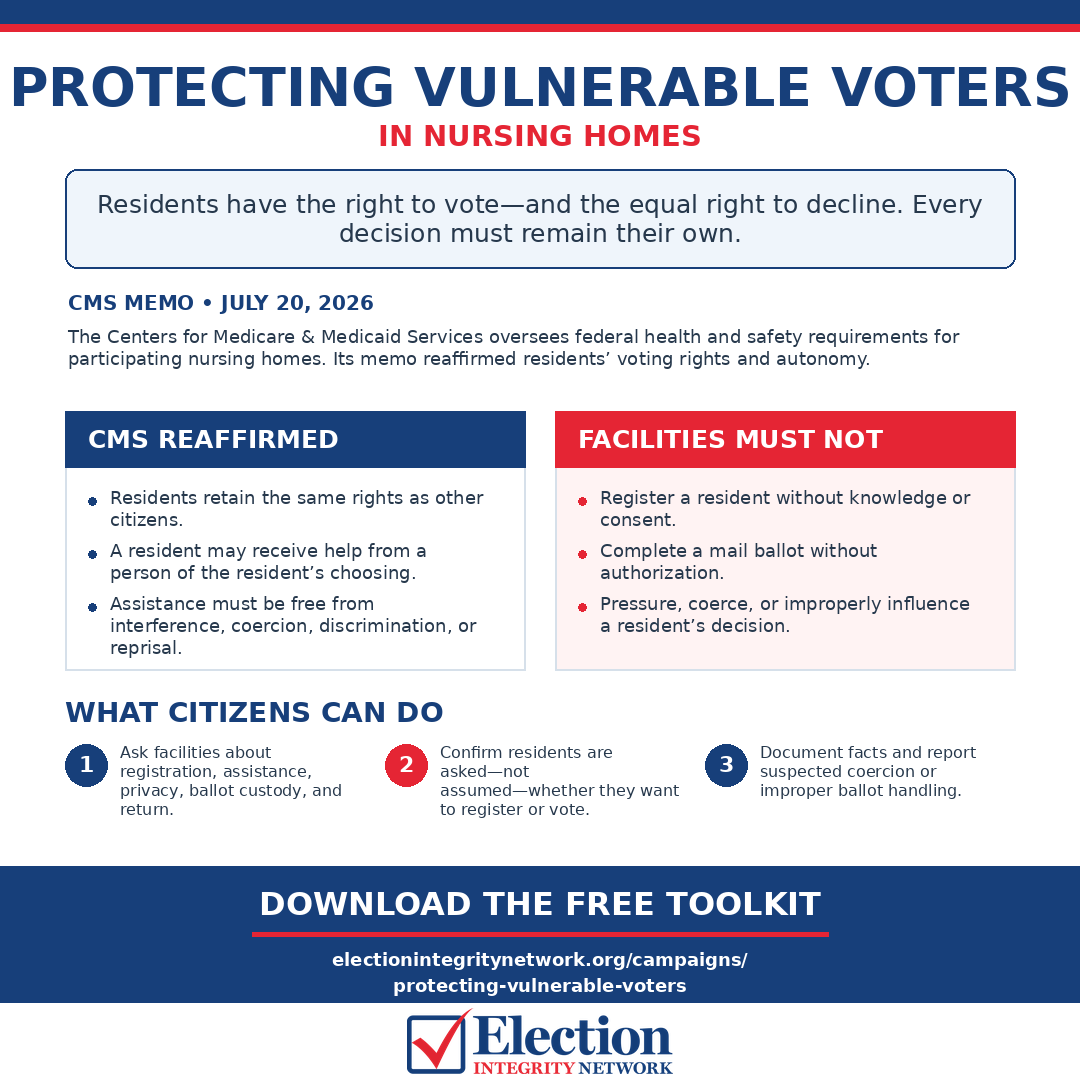
Residents of care facilities are among our nation’s most vulnerable voters, making the protection of their individual rights, choices, and voices especially important. On July 20, 2026, the Centers for Medicare & Medicaid Services issued updated guidance reaffirming federal protections that ensure residents have both the right to vote and the equal right to decline to participate, free from coercion, improper influence, or unauthorized action.
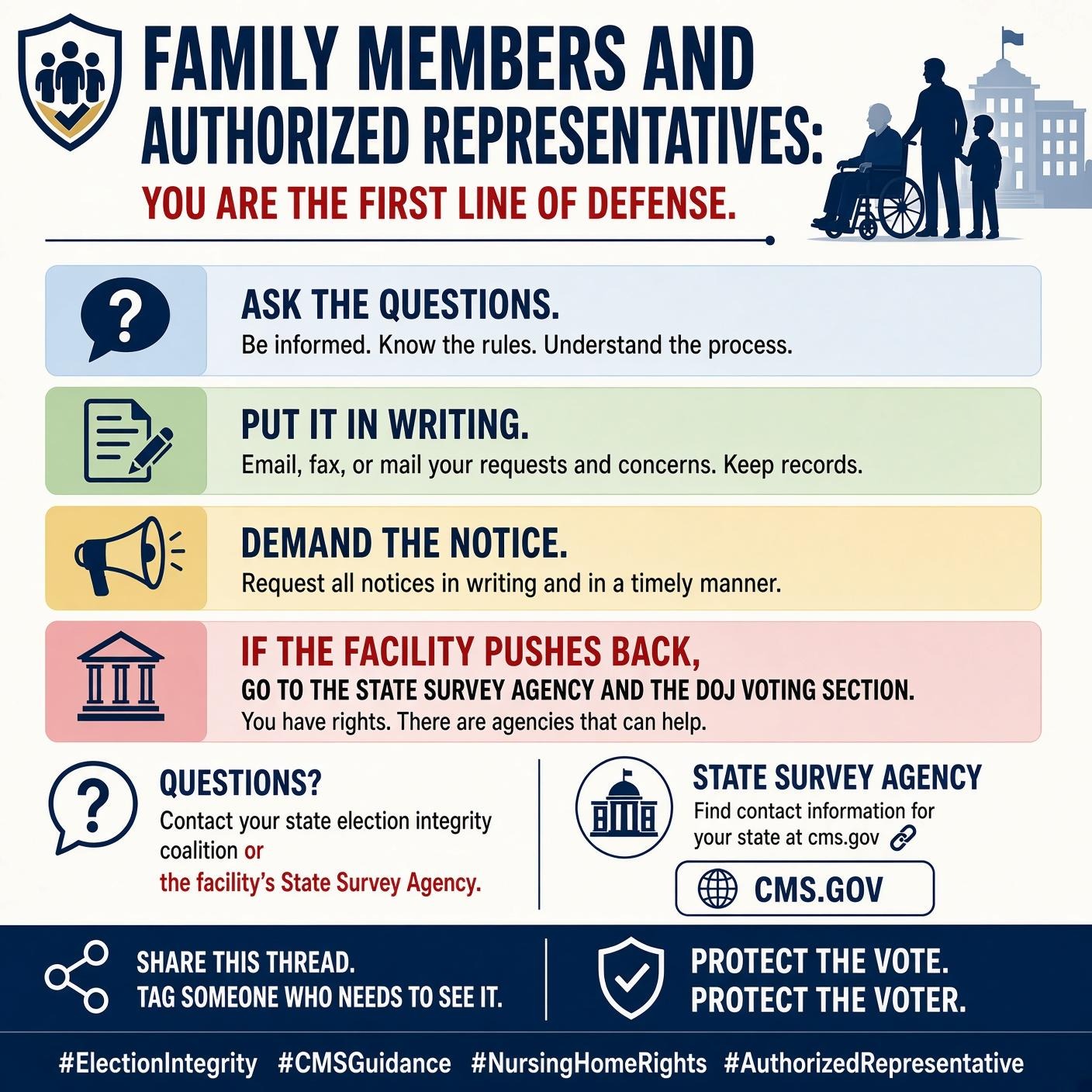
EIN’s Protecting Vulnerable Voters’ Toolkit provides facilities, families, state coalitions, and volunteers with practical resources to understand these protections, promote proper procedures, recognize and document potential concerns, and ensure those concerns are directed through the appropriate channels. The goal is simple: protect the resident’s autonomy, dignity, and voice while helping ensure the integrity of the voting process.
Why Vulnerable Voters Need Protection:
Wisconsin 2020 InvestigationIn 2020, the Wisconsin Elections Commission directed clerks not to send special voting deputies into nursing homes because of COVID restrictions. In December 2021, Wisconsin Voter Alliance worked with families whose relatives in care facilities had votes recorded in the November 2020 election. Attorney Erick Kaardal recorded interviews in eight facilities. Wisconsin Voter Alliance published that video on February 20, 2022.
*Interviews recorded December 2021 by attorney Erick Kaardal for Wisconsin Voter Alliance (Ron Heuer, President). Originally published February 20, 2022.
wisconsinvoteralliance.com/press
Graphics

Amet minim mollit non deserunt

Amet minim mollit non deserunt


Residents of care facilities are among our nation’s most vulnerable voters, making the protection of their individual rights, choices, and voices especially important. On July 20, 2026, the Centers for Medicare & Medicaid Services issued updated guidance reaffirming federal protections that ensure residents have both the right to vote and the equal right to decline to participate, free from coercion, improper influence, or unauthorized action.
EIN’s Protecting Vulnerable Voters’ Toolkit provides facilities, families, state coalitions, and volunteers with practical resources to understand these protections, promote proper procedures, recognize and document potential concerns, and ensure those concerns are directed through the appropriate channels. The goal is simple: protect the resident’s autonomy, dignity, and voice while helping ensure the integrity of the voting process.
Case Studies
1. Limited-English-proficiency / ballot-control case (Iowa)
Wed, Sep 2, 2026 ~8:02 AM EDT
https://x.com/EIwatchdogs/status/2095120083412451740
Case: 2020 Sioux City elections. Kim Phuong Taylor targeted Vietnamese-American households where some residents had limited English. She completed registrations, absentee requests, and ballots without voters’ permission—including for college students away from home.
Outcome: Federal jury convicted her on all 52 counts. Sentence: 4 months prison + 4 months home confinement. Eighth Circuit upheld the convictions in 2025.
Message: Language assistance should empower voters, not give operatives control of their ballots.
Sources cited in post: DOJ and Eighth Circuit links.
2. Alabama nursing-home cases (two incidents, same vulnerability)
Mon, Aug 31, 2026 ~8:01 AM EDT
https://x.com/EIwatchdogs/status/2094395175770468728
Cases:2006: Candidate Darren Flott and a nursing-home employee accused of preparing absentee ballots for patients who were comatose or unable to communicate. Democratic Party threw out 78 of Flott’s runoff votes. Flott later pleaded guilty to two misdemeanor election charges.2024: Nursing-home employee Michele Toomey alleged to have placed a pen in an incapacitated resident’s hand and used it to mark an “X” on an absentee-ballot application after a probate court had ruled the resident ineligible. Toomey pleaded not guilty; allegations not proven in court at time of post.
Message: Vulnerable citizens cannot be treated as sources of ballots. Require consent. Hold proven violators accountable.
3. Texas candidate-in-the-facility case
Sun, Aug 30, 2026 ~10:00 AM EDT
https://x.com/EIwatchdogs/status/2094062751538610513
Case: 2016 Democratic primary runoff, Waxahachie, Texas. Constable candidate Tyron Davis went through a nursing home filling out mail-ballot applications for as many as 18 elderly residents. At least one had Alzheimer’s; several later told investigators they did not understand what they signed. Applications showed similar handwriting and did not identify an assister.
Outcome: 2017 jury convicted Davis on six counts of voter fraud. He resigned as constable and permanently surrendered his peace-officer license.
Message: This was not harmless assistance. Candidates and operatives must not use nursing homes as ballot pools. Assistance must start with the voter’s knowledge, consent, and independent choice.
4. Michigan caregiver / guardian cases (two 2020 incidents)
Fri, Aug 28, 2026 ~8:00 AM EDT
https://x.com/EIwatchdogs/status/2093307768924958791
Cases:Nursing-home employee Trenae Rainey filled out roughly two dozen absentee-ballot applications for residents who had never told staff they wanted to vote, forged signatures, and handed them to another employee for delivery. An alert clerk caught mismatched signatures.Professional guardian Nancy Williams submitted absentee-ballot applications for 26 legally incapacitated people under her care without their knowledge or consent and directed ballots to her business address. Administrators noticed multiple “X” signatures.
Outcomes: Rainey pleaded guilty — 45 days jail + 2 years probation. Williams pleaded guilty to seven election-related counts — 1 year probation + $3,500 fine. No fraudulent ballots were counted in the Williams matter.
Message: Guardianship is not ownership. Assistance is not authority. No caregiver, guardian, or facility employee has the right to decide whether or how another citizen votes.