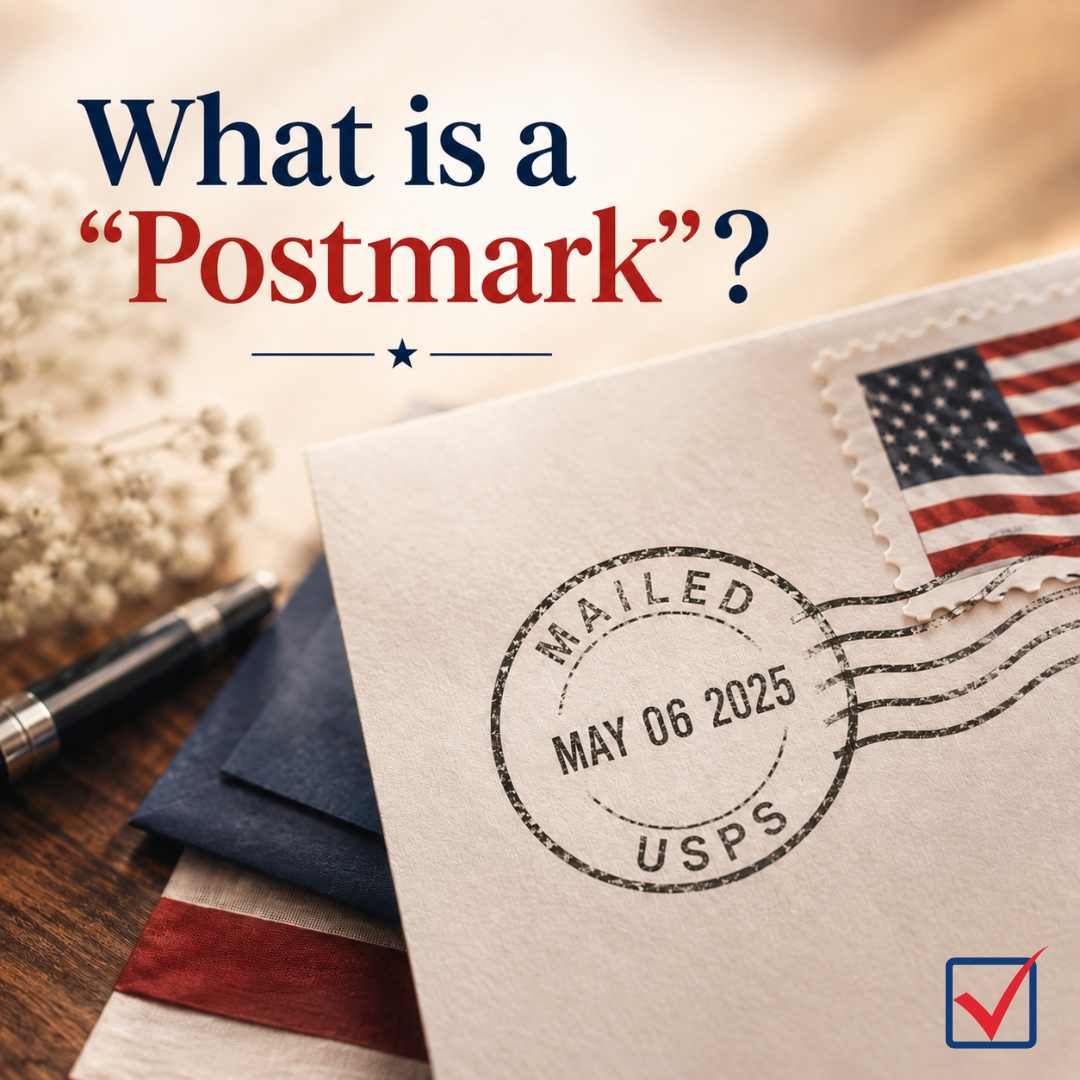

What is a Postmark is the question that the SCOTUS decision in Watson ignored. However, it retained the Postmark as the foundational principle for accepting a vote by mail ballot. This article will demonstrate why this should be alarming for any voter. Failing to define or recognize the role of the USPS in American elections demands that states must now consider:
The most common understanding is that a “Postmark” on an envelope is the day that the USPS receives a piece of mail. SCOTUS in the Watson decision expresses this understanding, and many state statutes reflect this understanding when it comes to counting vote by mail ballots received after Election Day. Presumption of this traditional understanding will potentially cause more voter disenfranchisement. A recent clarification by the USPS, states that a “Postmark” is created on the day that the USPS, responsible for delivery, actually possessed a piece of mail, not necessarily the day they received a piece of mail.
This clarification was necessary because in 2021, the USPS introduced a new mail processing and transportation program called “Delivering for America” (DFA). In this program all mail is processed at Regional Processing Centers, which may actually be in another state, where the “Postmark” is applied, but not until it reaches the first processing and sorting equipment. A second feature of DFA is “Local Transportation Optimization” (LTO) where mail is held at the local Post Office for a day or two, before it is transported to the Regional Processing Center where it is scanned. These changes dramatically change the definition of the “Postmark”; essentially creating an application process of the Postmark to a date much later than understood by the USPS ‘customer’. In other words, a ballot mailed at the USPS on election day may very well not be postmarked on election day without the voter realizing that their vote would not count, no matter what ‘window’ of receipt is allowed by a state.
The Watson decision sets the standard. Ballots must have a USPS “Postmark” no later than Election Day, to count in the extended receipt period allowed by a state for ballot receipts post- Election Day. With the clarification of the “Postmark” by USPS, it is impossible to know if a ballot was mailed by Election Day. The SCOTUS decision assumes that ballots mailed by Election Day will have a “Postmark” confirming that the voter cast their vote by the deadline, which they have defined as Election Day. SCOTUS failed to consider that the USPS practices undermine the very decision it rendered.
Eighteen states have statutes that allow ballots that are postmarked by Election Day, and received after Election Day, to count. While some of these states, North Carolina, Ohio, Virginia, and Oregon require a “Postmark” by Election Day to count, and other states like California and Nevada will accept ballots after Election Day without a “Postmark”; SCOTUS did little to change these current statutes or impact states that do not currently utilize this vulnerable system. Just as unsettling are statutes that allow the use of other means to determine if a ballot was mailed by Election Day. For example, in some states, if there is no “Postmark”, they use an “intelligent barcode scan” to determine the mail date. However, that barcode, like the stamped postmark , does not occur until the ballot reaches the Regional Processing Center. Again, a ‘scan’ does not guarantee a voter’s ballot will be accepted as meeting the election day deadline. In other words, there is no way to confirm the mail date. The USPS processes have now undermined the very ‘evidence’ that decided the Watson decision.
Conclusion
What is a “Postmark”, is neither a simple question nor one that voters clearly understand. In fact, with the Watson decision, SCOTUS has underscored the vulnerabilities of mail in ballots that Election Integrity advocates have raised for years. The answer is for states that currently have statutes that encourage voters to hand over their ballot to the USPS to change course. Election officials and legislatures must recognize that the ballot is not simply another piece of mail, processed by the USPS. The ballot is the very currency of a voter; it represents how a U.S. Citizen gives or takes away their consent to government. While the Watson case may result in hand ringing of legalizing post-election receipt of ballots, it did not expand the use of mail in ballots. Instead, it emphasizes the weaknesses in these states’ policies and procedures that can disenfranchise tens of thousands of voters.